

When you need a root canal, you want your dentist to see the inside of your tooth clearly. A dental microscope provides magnification and light that can help a dentist find small canal openings and see fine details. A missed canal can contribute to persistent infection. A dentist near you can explain when a microscope may help with your treatment.
What Is a Root Canal?
The inside of a tooth contains soft tissue called pulp, which includes nerves and blood vessels. When the pulp becomes inflamed or infected, root canal therapy may help preserve the tooth. Your dentist numbs the area, makes an opening in the tooth, removes affected pulp, and cleans and seals the canals. The tooth also needs a restoration to protect it.
Why Magnification Helps During Root Canal Therapy
The number, shape and location of canals vary from tooth to tooth. Some openings are small or difficult to see. By magnifying the treatment area and directing light into it, a microscope can help your dentist identify canal openings that might otherwise be difficult to locate.
How Does a Dental Microscope Help?
Seeing Small Canal Openings
Magnification can help a dentist identify additional canal openings, particularly when a tooth has complex anatomy. Finding these openings helps the dentist plan how to clean and seal the canals.
Finding Calcium Buildup
Mineral deposits can narrow or obscure a canal opening. A microscope can help the dentist identify the area and work carefully around it.
Looking for Tooth Cracks
Magnification can make some cracks easier to see. What a crack means for the tooth depends on its location and extent.
Removing Old Filling Material
During retreatment, magnification can help the dentist see old root filling material and other details while reopening the canals.
Zeiss Dental Microscope Technology at West Calgary Dental Group
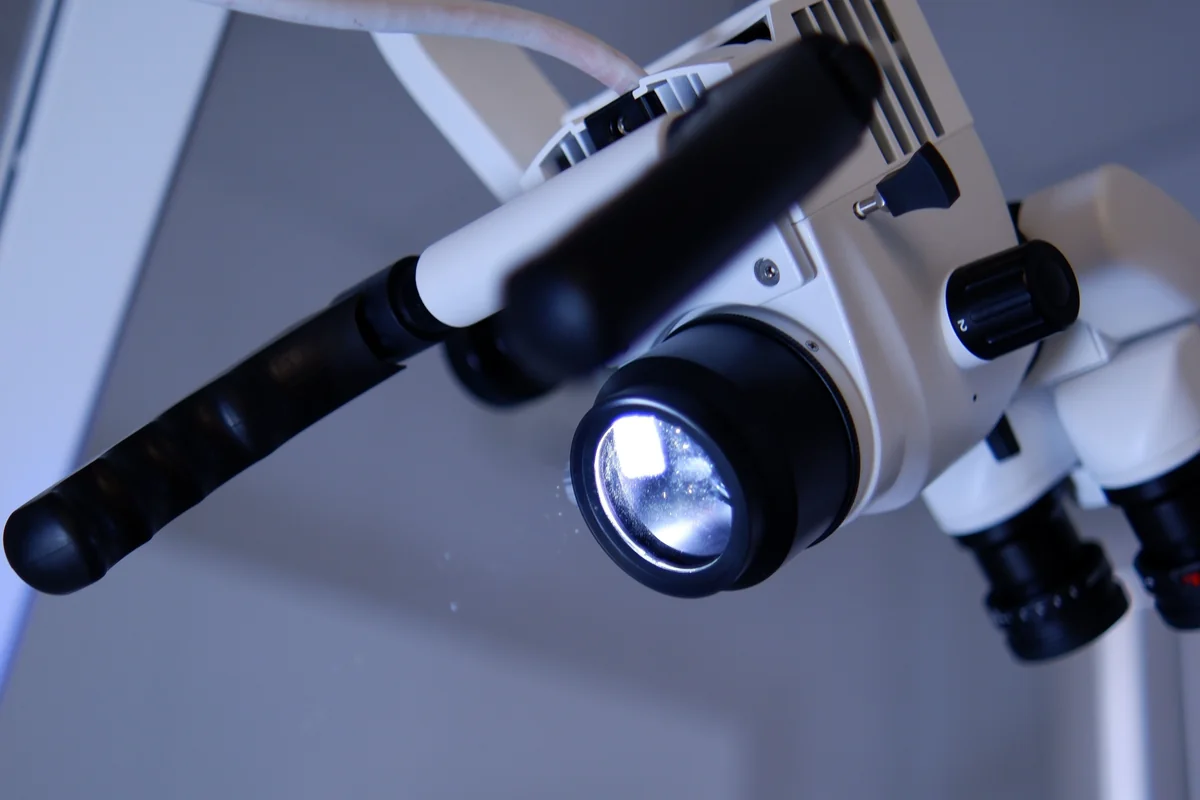
The team uses a Zeiss Pro-Ergo dental operating microscope for selected procedures that require extra light, magnification and precision. The technique your dentist recommends depends on the tooth and the treatment it needs.
What Affects Whether a Tooth Can Be Saved?
A microscope helps your dentist see details during treatment. The condition of the tooth, the extent of infection or damage, and the final restoration also affect the outcome. If you are deciding between a root canal and a tooth extraction, ask your dentist about the options for your tooth.
Ask About Root Canal Treatment
If you have tooth pain or have been advised to get a root canal, you can contact West Calgary Dental Group or request an appointment to discuss your tooth and whether magnification may help in your case.
FAQs
Why do root canals sometimes fail even after treatment?
A missed canal can be one reason. Other causes include a crack or a restoration that allows bacteria to get back into the tooth. A dentist can assess what is happening and discuss whether retreatment is appropriate.
How does a microscope help during a root canal?
The combination of magnification and light can help your dentist see small canal openings and other fine details. The outcome depends on the tooth and the overall treatment plan.
Does using a microscope take longer?
Appointment length depends on the tooth, the number of canals, and whether you need first-time treatment or retreatment. Ask your dentist how much time to set aside.
Will my root canal cost more if a microscope is used?
The cost depends on the tooth and the treatment required. Ask the clinic for an estimate for your specific case.
Further reading on dental operating microscopes is available from the American Association of Endodontists.